
Beyond Probiotics: A Structural Approach to Gut Integrity
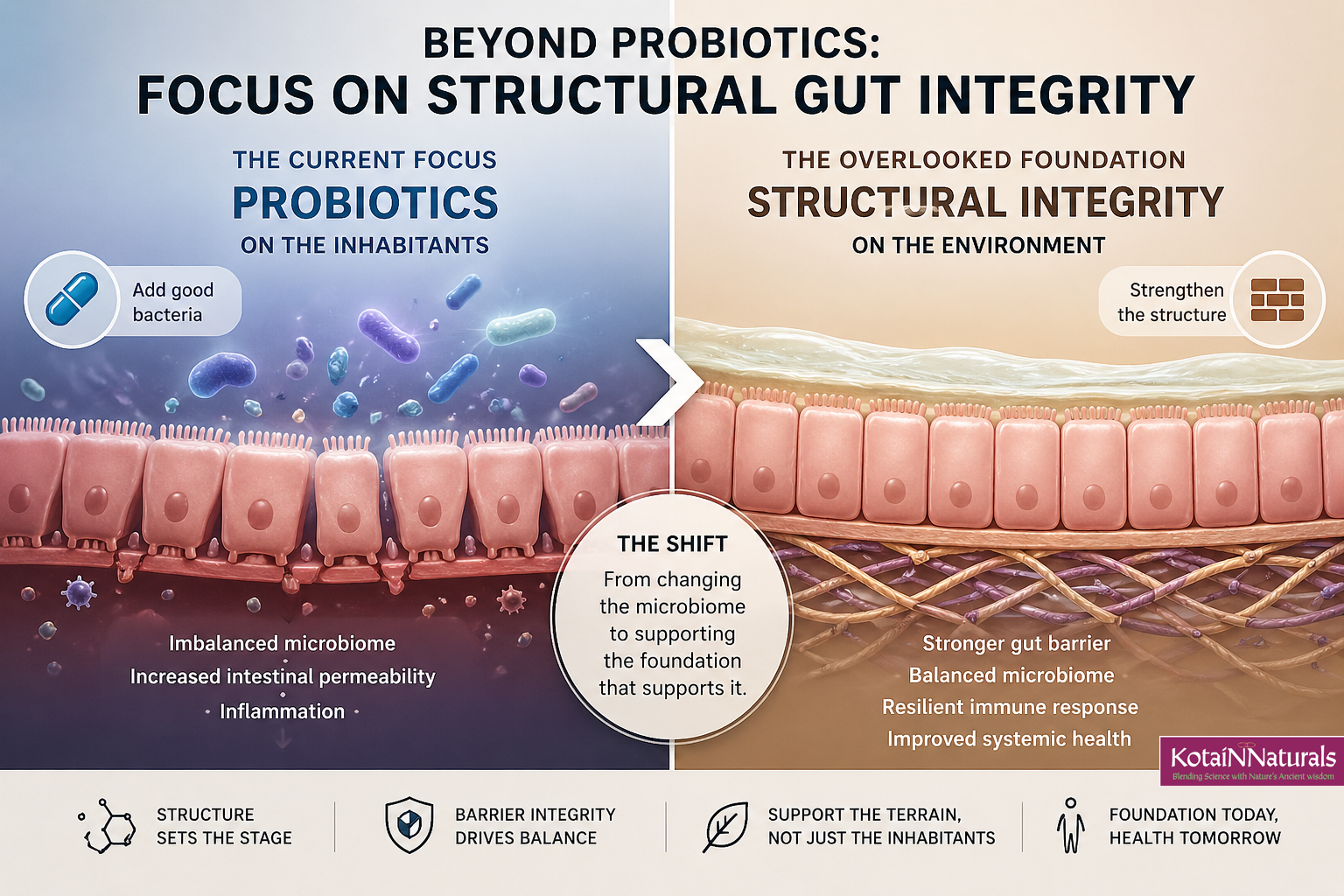
For years, the conversation around gut health has been dominated by the microbiome. We’ve been told it’s all about the "guests"—the trillions of bacteria we carry. But what if we’ve been focusing on the inhabitants while the "house" itself is falling apart?
Rather than viewing gut health purely through a microbial lens, we must consider a more foundational question: Does the condition of the intestinal lining itself play the defining role? The integrity of the gut wall quietly shapes whether microbial communities stabilize or remain in flux, suggesting that the “terrain” is just as relevant as the organisms that inhabit it.
Understanding Gut Health: The Foundation of Vitality
Gut health refers to the physical state and physiological function of the gastrointestinal (GI) tract. It is a complex system involving the microbiome, the immune system, and the intestinal barrier.
A substantial portion of the body’s immune activity is associated with the gut, particularly within gut-associated lymphoid tissue (GALT). When this system functions well, the body efficiently absorbs nutrients while maintaining a selective barrier. When dysregulated, the effects ripple far beyond digestion.
The Phenomenon of “Leaky Gut”
Technically referred to as increased intestinal permeability, “leaky gut” describes a state in which the tight junctions of the intestinal lining become less selective.
Under normal conditions, these junctions act as gatekeepers. When permeability increases, microbial components and dietary antigens may cross into circulation, engaging the immune system and contributing to inflammatory signaling. This process is a contributing factor within a broader physiological context, rather than a standalone cause of inflammation.
The Rising Tide: Statistics and Prevalence
Digestive distress is no longer a niche concern; it is a modern epidemic.
Widespread Impact: Nearly 60–70 million Americans are affected by digestive diseases.
The Rise of IBD: The prevalence of Crohn’s disease and Ulcerative colitis has risen significantly over recent decades, particularly in industrialized regions.
The Silent Struggle: Many individuals experience ongoing symptoms—like bloating, fatigue, or brain fog—without a clear clinical diagnosis. This highlights a growing gap between clinical data and the lived experience of those who feel "unwell" despite normal test results.
What Causes the Damage?
Disruption of gut barrier function is typically multifactorial:
Dietary patterns: Diets high in ultra-processed foods and emulsifiers are currently being studied for their potential to degrade the protective mucus layer.
Chronic stress: Sustained elevations in stress hormones can influence both microbial composition and intestinal permeability.
Medication use: Frequent use of NSAIDs (like ibuprofen) and repeated antibiotic exposure are known to impact the gut lining.
The Foundation: Structure Before Balance
The intestinal lining is more than just a barrier; it is a dynamic interface supported by a complex extracellular matrix (ECM) and held together by tight junctions. True gut health depends on this physical architecture—without a resilient "scaffold," a balanced microbial community has nowhere to take root.
The Systemic Link: Connective Tissue
While hair and the gut lining serve different functions, they share a fundamental biological requirement: structural proteins and minerals. The same connective tissue integrity that supports a healthy hair follicle is required to maintain the "basement membrane" of your intestinal wall.
Our formula was originally engineered to support the structural precursors of hair and skin. However, we discovered a profound "side effect": because the body draws from the same systemic pool of nutrients to repair its internal linings, users experienced a significant improvement in gut integrity.
The Dual-Action Structural Synergy
We leverage the specific bio-nutrients required for collagen and connective tissue synthesis:
Structural Support via Silica (Food-Grade DE): Silica is a trace mineral essential for the cross-linking of collagen and elastin. By supporting the strength of the connective tissue within the gut wall, it helps provide the framework necessary for a resilient, less permeable lining.
The Enzymatic Catalyst (Vitamin C): Vitamin C is a mandatory cofactor for the enzymes responsible for stabilizing the collagen "scaffold." Without it, the body cannot effectively repair the structural junctions of the gut—or the hair follicle.
Habitat Shapes Outcome
The microbiome does not operate in isolation; it is a reflection of the environment it inhabits. By reinforcing the "house," you fundamentally change the biological landscape.
When the intestinal barrier is structurally sound, it fosters superior immune regulation and nutrient absorption. This creates a "ripple effect": when you provide the body the tools to strengthen its internal architecture, the results manifest globally—from improved digestion and energy to more resilient hair and skin.
